


Skip to content
Astrad Allied Health
Call us
Older Adult OT · Dementia support

OT for people living with dementia, in the home that knows them.

A mobile OT helps maintain daily routines, safety and independence for people living with dementia, at home where it matters most.

Occupational therapy can't reverse cognitive decline, but it can make a real difference to how someone functions day to day. Our OTs work with the person living with dementia and their family to assess what's changing, adapt the home environment, simplify daily routines, introduce meaningful activity, and give carers practical strategies to reduce stress and maintain safety. We visit at home, where we can see how the person actually lives rather than in a clinical setting removed from their reality. Most clients access this through a Home Care Package (HCP), DVA or privately.

  • AHPRA-registered OTs with dementia-care experience
  • Home visit: we see how the person actually functions
  • HCP (Level 1-4), DVA & private funding accepted
  • Carer coaching included where needed
Call (07) 3477 9366

You'll speak with one of our AHPRA-registered OTs.

Book a callback

We usually call back within one business day.

  • Free intake call
  • No obligation
  • No referral needed
Your info stays confidential. Privacy policy.

OT support for people living with dementia

AHPRA-registered OTs
Home Care Package (HCP)
DVA Gold & White Card
Cognitive assessments
Home visits across 4 states
Older Adult OT · Dementia support

What OT actually does for someone living with dementia

OT cannot treat dementia or slow cognitive decline. What it can do is make a real and practical difference to how someone functions day to day. Most callers are adult children concerned about a parent's safety at home, or home care coordinators trying to understand what to request. Here is what our OTs actually do when they work with someone living with dementia and their family.

Functional cognition assessment

Your OT carries out a standardised functional cognition assessment, looking at how cognitive changes are affecting daily tasks: managing medications, preparing food, using appliances, navigating the home safely. This is not a diagnostic assessment but documents functional impact clearly, which supports HCP planning, GP referrals and decision-making about the level of supervision needed.


Daily routine and environmental adaptation

Familiar routines provide structure that helps reduce confusion and agitation. Your OT works with the family to simplify and sequence daily routines, introduce visual cues and prompting systems, and adapt the home environment to make tasks easier to initiate and complete. This might include labelled cupboards, structured meal times or a simplified morning routine the person can mostly manage themselves.

Home safety assessment

Safety risks are elevated for people living with dementia. Your OT assesses kitchen and stove safety, bathroom falls risk, door and exit security for clients who wander, medication storage and access, and general household hazards. Recommendations are practical and proportionate, not a blanket removal of all independence. The aim is to reduce risk while preserving as much autonomy as possible.

Meaningful activity and engagement

Withdrawal from meaningful activity accelerates decline and increases agitation. Your OT identifies activities the person has always valued and works with the family to adapt them to the person's current cognitive level. This might be a modified version of gardening, a simplified card game or a sensory activity that connects with the person's long-term memory and interests.

Carer coaching and communication strategies

How carers communicate and approach daily tasks has a direct effect on the person's stress levels and willingness to engage. Your OT coaches family members and paid carers on effective communication (approach, tone, task instruction), how to respond when the person becomes distressed or resistant, and how to structure the care day to reduce friction. This is often the most immediately useful part of the OT visit.

HCP documentation and care planning

Our OTs write clear, detailed reports that document the person's functional cognition, their care needs and the recommended supports. These reports support HCP level reviews, ACAT reassessments and GP decision-making. For families navigating the aged care system, having a current OT report that documents what is changing and why makes a significant difference to the level of package approved.

OT supports function, safety and daily life for people living with dementia. It does not treat or reverse cognitive decline. If you are concerned about a diagnosis, your GP or a geriatrician is the right starting point.

How it works

Getting started with a mobile OT

Whether NDIS, aged care, DVA or private, the admin can feel complicated. We handle the paperwork and explain the funding options in plain English so you can focus on the person, not the process.

01

Call us or request a callback

Phone (07) 3477 9366 or drop your details in the form. Our intake team usually responds within one business day. We'll ask about age, goals, funding and where you're based.

02

Matched with the right Occupational Therapist

We pair you with an AHPRA-registered OT experienced in your context: paediatric, adult, older adult, rehab or reports. You know who's coming, and why they're the right fit.

03

Mobile OT, we come to you

Your OT visits you at home, at school, at work or in the community. We build a personalised plan, document progress, and coordinate with your supports, GP or support coordinator.

Meet the team

The people behind every visit

Our Occupational Therapists are AHPRA-registered, supported by OT assistants, a psychologist, a speech pathologist and a warm admin team who'll be your first point of contact. Small enough to know your name, big enough to match you with someone whose experience fits your goals.

AHPRA-registered OTs SPA Certified Speech Pathologist Coverage across QLD, NSW, VIC, TAS
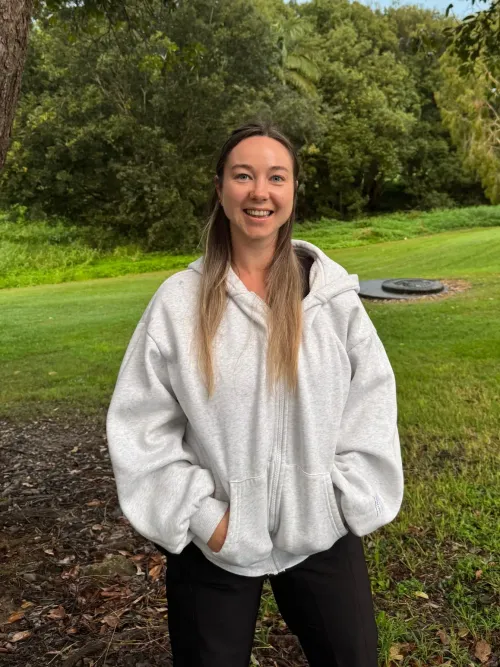
Emily, Occupational Therapist at Astrad

Emily

Occupational Therapist

AHPRA-registered
Jamie, Occupational Therapist at Astrad

Jamie

Occupational Therapist

AHPRA-registered
Lachlan, Occupational Therapist at Astrad

Lachlan

Occupational Therapist

AHPRA-registered
Andrew, Occupational Therapist at Astrad

Andrew

Occupational Therapist

AHPRA-registered
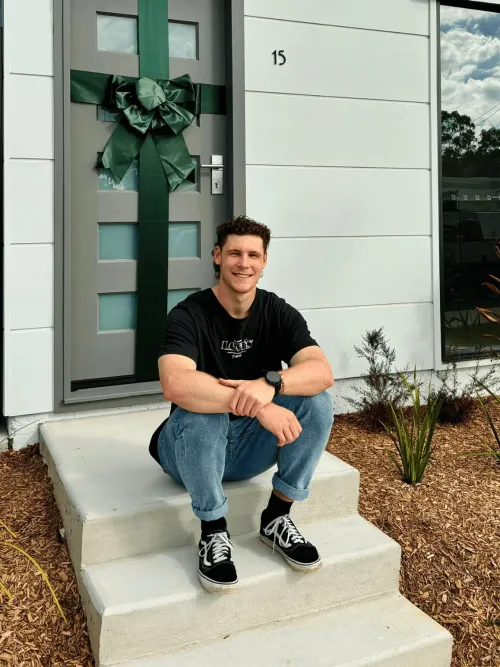
Matt, Occupational Therapist at Astrad

Matt

Occupational Therapist

AHPRA-registered
Niamh, Occupational Therapist at Astrad

Niamh

Occupational Therapist

AHPRA-registered
Elloise, Occupational Therapist at Astrad

Elloise

Occupational Therapist

AHPRA-registered
Bronwen, Occupational Therapist at Astrad

Bronwen

Occupational Therapist

AHPRA-registered
Monique, Occupational Therapist at Astrad

Monique

Occupational Therapist

AHPRA-registered
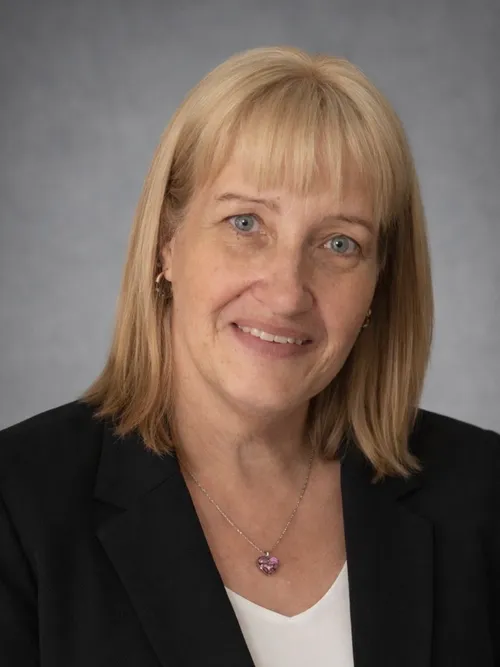
Sally, Occupational Therapist at Astrad

Sally

Occupational Therapist

AHPRA-registered
Sanskruti, Occupational Therapist at Astrad

Sanskruti

Occupational Therapist

AHPRA-registered
Mala, Occupational Therapist at Astrad

Mala

Occupational Therapist

AHPRA-registered
Milly, Psychologist at Astrad

Milly

Psychologist

AHPRA-registered
Teresa, Speech Pathologist at Astrad

Teresa

Speech Pathologist

SPA Certified Practising
April, Occupational Therapy Assistant at Astrad

April

Occupational Therapy Assistant

Under OT supervision
Georgie, Occupational Therapy Assistant at Astrad

Georgie

Occupational Therapy Assistant

Under OT supervision
Mia, Occupational Therapy Assistant at Astrad

Mia

Occupational Therapy Assistant

Under OT supervision
Liliana, Speech Therapy Assistant at Astrad

Liliana

Speech Therapy Assistant

Under SPA supervision
Delia, Client Intake Coordinator at Astrad

Delia

Client Intake Coordinator

Intake team
Bethany, Client Intake Coordinator at Astrad

Bethany

Client Intake Coordinator

Intake team

Swipe to see more

Request a clinician match

Tell us your preferences: gender, language, cultural background, clinical experience. We'll match you with a clinician who fits.

Transparent pricing

No surprises on your invoice

We can't list fixed prices publicly. What you pay depends on your funding stream, the service, and your location. But every Astrad client gets the same three things, in writing, before any visit is booked.

Request a written quote

A written quote before we start

Every client gets a clear written quote setting out session rates, expected travel time and any reports, before we schedule a single visit.

Within NDIS price limits

For NDIS participants we bill within the limits set out in the current NDIS Pricing Arrangements and Price Limits. No surprises at invoice time.

Travel disclosed up front

Travel and non-face-to-face time are always quoted in writing, at the rates allowed for your funding stream. What you see is what you pay.

Coverage

Mobile OT across four states

Our Occupational Therapists travel to you. At home, at school, at work or in the community. We cover metro and many regional areas across Queensland, NSW, Victoria and Tasmania. Not sure if we reach your postcode? Ask us. We usually confirm within one business day.

Check availability

Queensland

Brisbane, Gold Coast, Sunshine Coast, Ipswich, Logan, Toowoomba

New South Wales

Sydney, Central Coast, Wollongong, Newcastle

Victoria

Melbourne, Geelong, Bendigo, Ballarat

Tasmania

Hobart, Launceston, Devonport

Questions & answers

Dementia OT: what families ask us

Most callers are adult children or home care providers trying to understand what OT can actually do. These are the most common questions we hear.

What can an occupational therapist do for someone with dementia?

Quite a lot, practically speaking. Our OTs assess how the person is managing daily tasks (getting dressed, preparing food, navigating the home safely) and identify where things are breaking down. From there, we recommend adaptations to the environment (better lighting, simplified layouts, clear labelling), modifications to routines (visual cues, prompting systems, structured activity schedules), and strategies for carers to support the person without taking over. We also assess falls risk, which is elevated for many people living with dementia.

Will the OT do a cognitive assessment?

Our OTs can conduct standardised cognitive screening as part of a broader functional assessment, for example to document how cognitive changes are affecting daily function and to support HCP planning or a GP referral. We don't provide diagnostic assessments (that's the role of a neuropsychologist or geriatrician), but we do document functional cognition clearly and can write reports that support funding decisions.

Does a Home Care Package fund OT for dementia?

Yes. OT assessments, functional reviews, home environment assessments and carer coaching are all fundable through HCP (Level 1-4). If the client already has an HCP, their home care provider can coordinate the OT service. For clients on the CHSP, OT may also be available through the programme. Call us and we'll help you work out what's in place.

Can the OT come to the home even if the person with dementia is resistant?

This is more common than you might think, and our OTs are used to it. We take a low-key, conversational approach, and the visit rarely feels like a formal assessment to the person. We involve them, follow their lead and work at their pace. In some cases, the initial visit is primarily an information-gathering session with the carer or family. We'll discuss the best approach with you before we book.

What safety issues does an OT assess for dementia clients?

Falls risk is the most common concern. Beyond that, we assess kitchen and stove safety (including when supervised vs unsupervised cooking is appropriate), medication management, door and exit security for clients who wander, bathroom safety, and the risk of burns, scalds and other household hazards. We provide practical, proportionate recommendations rather than a blanket list of things that must be banned.

How often does a person with dementia need to see an OT?

It depends on the stage and rate of change. An initial assessment followed by a review six to twelve months later is common. As the condition progresses, more frequent contact may be needed to reassess function, update equipment prescriptions or support carers through transitions. Your HCP case manager can help plan the right frequency within the package.

Can the OT support the carer, not just the person with dementia?

Absolutely, and it's a core part of what we do. Carer burnout is one of the main reasons home care arrangements break down. Our OTs coach family members and paid carers on safe manual handling, effective communication strategies, how to respond to distress, and how to structure the day to reduce confusion and agitation. We can also write a carer support plan as part of the HCP documentation.

Ready when you are

OT support for your family member living with dementia

Our mobile OTs visit at home across QLD, NSW, VIC and TAS. We work with the person, their carers and their home care team to keep daily life as manageable and safe as possible. Funded through HCP, DVA or privately. Call us to find out what applies in your situation.

We usually call back within one business day.

Mon–Fri 9am–5pm Brisbane time

Request a callback

We usually call back within one business day.

Call us