


Skip to content
Astrad Allied Health
Call us
NDIS-ready reports · SDA Assessments

SDA assessment reports providing functional evidence for NDIS housing decisions, written to spec.

OT-written SDA assessment reports for NDIS participants seeking Specialist Disability Accommodation funding. Conducted at home, written to NDIS standards.

Specialist Disability Accommodation (SDA) is NDIS funding for purpose-built or significantly modified housing for people with extreme functional impairment or very high support needs. Obtaining SDA funding requires a substantial body of evidence, and an OT assessment report is a core component. Our OTs conduct the assessment at home, document the person's current functional capacity, support needs and housing-related requirements, and write a clear, evidence-based report that addresses the SDA eligibility criteria. SDA funding is approved by the NDIA; our report provides the functional evidence to support that application.

  • Addresses NDIA SDA eligibility criteria
  • Thorough functional documentation
  • Support coordinator ready
  • Typical turnaround 2–3 weeks
Call (07) 3477 9366

You'll speak with one of our AHPRA-registered OTs.

Request an SDA assessment quote

We usually call back within one business day.

  • Free intake call
  • No obligation
  • No referral needed
Your info stays confidential. Privacy policy.

SDA assessment reports across QLD, NSW, VIC & TAS

AHPRA-registered OTs
NDIS self- & plan-managed
Support coordinators welcome
Plan managers welcome
Home-based assessments
NDIS-ready reports · SDA Assessments

What an OT SDA assessment report covers and how it fits into the application

SDA is among the most scrutinised areas of NDIS funding. An OT assessment is a required component of the evidence package, but it is not the only component, and the OT report alone does not determine SDA eligibility. The NDIA assesses the full evidence package and makes the funding decision. Our role is to provide thorough, specific functional evidence that addresses the eligibility criteria. This page explains what that assessment covers and how the report is used.

SDA eligibility criteria in plain terms

To be considered for SDA funding, a participant generally needs to meet one of two criteria: extreme functional impairment (significant limitations across multiple daily living domains that cannot be adequately addressed without purpose-built housing features) or very high support needs (requiring the active presence of a person or complex assistive technology for most daily tasks). The OT assessment is written to address these criteria with specific functional evidence, not general diagnostic history.


Functional assessment for the five SDA design categories

The NDIA recognises four SDA design categories: Improved Liveability, Fully Accessible, Robust, and High Physical Support. Each category corresponds to a specific functional profile. The OT assessment documents the participant's functional needs against the design category most relevant to their situation, with clinical justification for why that category is appropriate. Where multiple categories may apply, the report addresses the primary functional driver.

What the home assessment covers

The OT visits the participant's current home or accommodation and assesses functional capacity across daily living domains: mobility and transfers, self-care, communication, home management, community access and safety. Current support hours, equipment used and the functional limitations of the existing environment are all documented. The assessment typically takes one to two hours.

Evidence-based recommendations and NDIA's role

The OT report provides functional evidence and recommendations about the housing features the participant requires. It does not approve or guarantee SDA funding. That decision is made by the NDIA based on the full evidence package. The report is written to support the application, not to advocate for a particular outcome. Support coordinators and participants should understand this distinction before the assessment is booked.

Report structure and what the NDIA expects

An SDA OT assessment report is typically more detailed than a standard progress report. It covers referral context; full functional capacity assessment across relevant domains; standardised assessment results; current support needs and hours; housing-specific functional requirements; SDA design category recommendation with clinical justification; and the inadequacy of current housing in relation to the participant's needs. The report is sent to the support coordinator or plan manager for inclusion in the SDA application package.

Coordination with housing providers and the support team

SDA applications are usually coordinated by a specialist support coordinator who manages the full evidence package. Our role is the OT functional evidence component. We liaise with the SSC, other treating practitioners and, where the participant has identified a preferred SDA provider, we can discuss the functional requirements of the proposed property. Referrals should come through the support coordinator wherever possible so scope and timing align with the broader application.

The OT assessment provides functional evidence for the SDA application. SDA funding eligibility is determined by the NDIA based on the full evidence package, which typically includes medical specialist reports, support worker documentation, and other allied health evidence. Astrad does not guarantee SDA funding approval and cannot advise on the likelihood of approval for a specific participant.

How it works

From referral to SDA assessment report in three steps

SDA applications are complex and multi-step. Our role is to provide thorough functional evidence. We work alongside the participant's support coordinator and multidisciplinary team throughout.

01

Referral in

Call (07) 3477 9366 or submit the form. SDA referrals are usually coordinated by a support coordinator. Tell us about the participant's diagnosis, current housing and functional situation, and where the SDA application is up to. We confirm the scope of the OT assessment and provide a written quote.

02

Home assessment visit

An AHPRA-registered OT conducts a thorough assessment in the participant's current home environment. We document functional capacity across daily living domains, support needs, current housing barriers, and the specific functional features that an SDA property would need to address. Standardised tools are used where clinically appropriate.

03

SDA assessment report delivered

The completed OT SDA assessment report is delivered digitally within two to three weeks. It provides functional evidence addressing NDIA SDA eligibility criteria, including extreme functional impairment and/or very high support needs. The report is sent to whoever you nominate: support coordinator, plan manager or specialist disability housing provider.

Who we assess

SDA assessments for NDIS participants with high support needs

SDA is designed for people with the most significant disability-related support needs. Our OT assessments document the functional evidence for participants across the eligible age range.

Birth

Kids

Birth – 17

SDA for children and young people

SDA is available to NDIS participants of all ages, including children and young people. For younger participants, the assessment documents current function and support needs, and the housing features that will be required as the person moves into adulthood. Forward planning is particularly important for families of children with complex needs.

  • Extreme functional impairment across daily living
  • Current support hours and complexity
  • Physical access and mobility needs
  • Safety and behavioural support needs
  • Current housing barriers
  • Future housing requirements as an adult
Enquire about kids OT
18

Adults

18 – 64

SDA assessments for working-age adults

The majority of SDA applications are for working-age adults with significant physical disability, acquired brain injury, complex neurological conditions or very high behavioural support needs. The OT assessment documents the extreme functional impairment and/or very high support needs required by the NDIA's SDA eligibility criteria.

  • Extreme functional impairment documentation
  • Very high support needs evidence
  • Physical access and mobility requirements
  • Assistive technology and environmental design needs
  • SDA design category justification (Improved Liveability, Fully Accessible, Robust, High Physical Support)
  • Current housing inadequacy and impact
Enquire about adults OT
65+

Older adults

65+

SDA and housing for older NDIS participants

Older people who entered the NDIS before the age threshold, or who have conditions meeting NDIS eligibility, may be eligible for SDA. The OT assessment documents current and projected functional needs in relation to housing design requirements.

  • Functional capacity and progressive conditions
  • Current housing barriers and safety
  • Physical access and equipment space requirements
  • Support needs and carer requirements
  • Future-proofing for deteriorating conditions
  • Transition from current housing
Enquire about older adults OT
Meet the team

The people behind every visit

Our Occupational Therapists are AHPRA-registered, supported by OT assistants, a psychologist, a speech pathologist and a warm admin team who'll be your first point of contact. Small enough to know your name, big enough to match you with someone whose experience fits your goals.

AHPRA-registered OTs SPA Certified Speech Pathologist Coverage across QLD, NSW, VIC, TAS
Emily, Occupational Therapist at Astrad

Emily

Occupational Therapist

AHPRA-registered
Jamie, Occupational Therapist at Astrad

Jamie

Occupational Therapist

AHPRA-registered
Lachlan, Occupational Therapist at Astrad

Lachlan

Occupational Therapist

AHPRA-registered
Andrew, Occupational Therapist at Astrad

Andrew

Occupational Therapist

AHPRA-registered
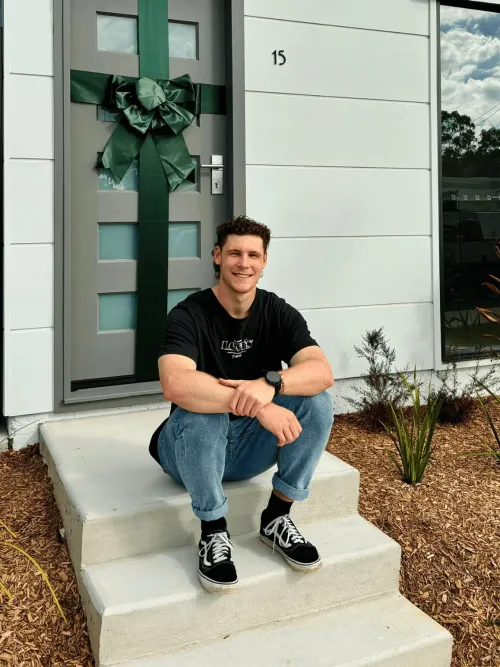
Matt, Occupational Therapist at Astrad

Matt

Occupational Therapist

AHPRA-registered
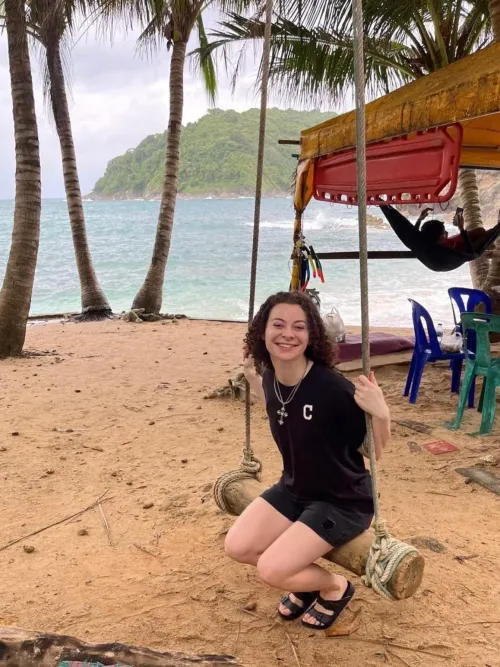
Niamh, Occupational Therapist at Astrad

Niamh

Occupational Therapist

AHPRA-registered
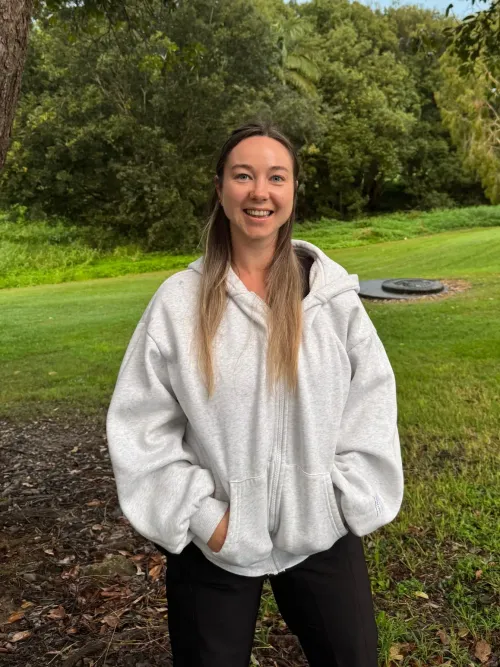
Elloise, Occupational Therapist at Astrad

Elloise

Occupational Therapist

AHPRA-registered
Bronwen, Occupational Therapist at Astrad

Bronwen

Occupational Therapist

AHPRA-registered
Monique, Occupational Therapist at Astrad

Monique

Occupational Therapist

AHPRA-registered
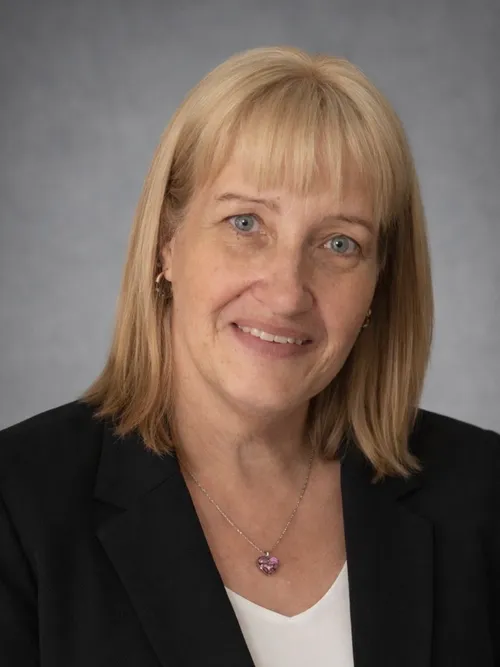
Sally, Occupational Therapist at Astrad

Sally

Occupational Therapist

AHPRA-registered
Sanskruti, Occupational Therapist at Astrad

Sanskruti

Occupational Therapist

AHPRA-registered
Mala, Occupational Therapist at Astrad

Mala

Occupational Therapist

AHPRA-registered
Milly, Psychologist at Astrad

Milly

Psychologist

AHPRA-registered
Teresa, Speech Pathologist at Astrad

Teresa

Speech Pathologist

SPA Certified Practising
April, Occupational Therapy Assistant at Astrad

April

Occupational Therapy Assistant

Under OT supervision
Georgie, Occupational Therapy Assistant at Astrad

Georgie

Occupational Therapy Assistant

Under OT supervision
Mia, Occupational Therapy Assistant at Astrad

Mia

Occupational Therapy Assistant

Under OT supervision
Liliana, Speech Therapy Assistant at Astrad

Liliana

Speech Therapy Assistant

Under SPA supervision
Delia, Client Intake Coordinator at Astrad

Delia

Client Intake Coordinator

Intake team
Bethany, Client Intake Coordinator at Astrad

Bethany

Client Intake Coordinator

Intake team

Swipe to see more

Request a clinician match

Tell us your preferences: gender, language, cultural background, clinical experience. We'll match you with a clinician who fits.

Transparent pricing

No surprises on your invoice

We can't list fixed prices publicly. What you pay depends on your funding stream, the service, and your location. But every Astrad client gets the same three things, in writing, before any visit is booked.

Request a written quote

A written quote before we start

Every client gets a clear written quote setting out session rates, expected travel time and any reports, before we schedule a single visit.

Within NDIS price limits

For NDIS participants we bill within the limits set out in the current NDIS Pricing Arrangements and Price Limits. No surprises at invoice time.

Travel disclosed up front

Travel and non-face-to-face time are always quoted in writing, at the rates allowed for your funding stream. What you see is what you pay.

Coverage

Mobile OT across four states

Our Occupational Therapists travel to you. At home, at school, at work or in the community. We cover metro and many regional areas across Queensland, NSW, Victoria and Tasmania. Not sure if we reach your postcode? Ask us. We usually confirm within one business day.

Check availability

Queensland

Brisbane, Gold Coast, Sunshine Coast, Ipswich, Logan, Toowoomba

New South Wales

Sydney, Central Coast, Wollongong, Newcastle

Victoria

Melbourne, Geelong, Bendigo, Ballarat

Tasmania

Hobart, Launceston, Devonport

Questions & answers

SDA OT assessments: what support coordinators and participants ask

SDA is one of the most complex areas of NDIS funding. We'll answer your specific questions about the OT assessment process. Call (07) 3477 9366.

What is an SDA assessment?

An SDA (Specialist Disability Accommodation) assessment is an OT-written report that documents the functional evidence needed to support an NDIS participant's application for SDA funding. SDA is purpose-built housing for people with extreme functional impairment or very high support needs. The OT assessment provides the functional component of the evidence base required by the NDIA. It does not guarantee SDA funding approval; that decision is made by the NDIA based on the total evidence package.

What are the SDA eligibility criteria?

To be eligible for SDA funding under the NDIS, a participant generally needs to meet two main criteria: extreme functional impairment (significant limitations in functional capacity across multiple daily living domains) or very high support needs (requiring the presence of a person or the active use of assistive technology for most daily tasks). The NDIA also considers whether SDA is a reasonable and necessary support given the person's situation. Our OT assessment is written to address these functional criteria directly.

What are the SDA design categories and does the OT report address them?

The NDIA recognises four SDA design categories: Improved Liveability (for cognitive, sensory or intellectual disability), Fully Accessible (for significant physical disability), Robust (for complex behaviours requiring a resilient physical environment), and High Physical Support (for very high physical support needs, including ceiling hoists and complex equipment). Our OT report addresses the design category most suited to the participant's functional needs and provides the clinical justification.

Is an OT assessment enough on its own to get SDA funded?

No. An SDA application requires a substantial body of evidence beyond the OT report, including supporting reports from other treating practitioners (typically a medical specialist), evidence of the current housing situation and its inadequacy, and often evidence from a support worker or specialist behaviour practitioner. An OT assessment is an important component, but SDA applications are usually coordinated by a specialist support coordinator working with the full multidisciplinary team.

Who coordinates the SDA application?

SDA applications are typically coordinated by a specialist support coordinator (SSC) who understands the NDIA's SDA evidence requirements and manages the full application process. Our role is to provide the OT functional evidence component. If your participant doesn't yet have an SSC, we can discuss options when you call.

How long does an SDA OT assessment take?

The assessment visit typically takes one to two hours, depending on the complexity of the participant's needs and the number of functional domains being assessed. The written report is generally delivered within two to three weeks of the visit. SDA reports are more detailed than standard progress reports, so we build in adequate report writing time to ensure thorough documentation.

Can the report be used if the participant is currently in hospital or transitional housing?

Yes. We can conduct assessments in hospital, transitional accommodation or supported accommodation as well as in the current home. For participants in hospital awaiting discharge, or in transitional housing pending a permanent SDA placement, we can assess in their current setting and document what the transition to SDA housing would address. Let us know the situation at the time of referral.

Ready when you are

Need an OT SDA assessment report? Let's confirm scope with you and the support coordinator.

SDA applications require careful coordination across the full support team. Our OTs provide thorough functional assessments and clear written reports that give the NDIA the evidence it needs from an OT perspective. For support coordinators managing SDA applications, we're happy to discuss what the OT report should cover before we confirm the booking. Call (07) 3477 9366 or submit the form.

We usually call back within one business day.

Mon–Fri 9am–5pm Brisbane time

Request a callback

We usually call back within one business day.

Call us